
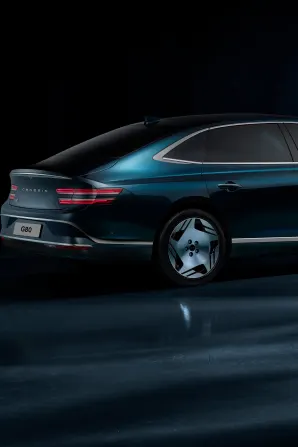
By the time a Perth buyer walks onto your forecourt, they have usually already decided which cars are worth seeing in person. They scrolled through dozens of listings on their phone, formed a shortlist in minutes, and dismissed the rest without a second thought. The photo did that work – which is why professional dealership car photography is what turns a scroll-past into an enquiry rather than another vehicle sitting quietly on the lot.
This isn’t about making cars look pretty. It’s about the causal chain between how a vehicle is presented and how fast it sells. Below we walk through how that link actually works, and why photography deserves a place on your stock-performance dashboard rather than the bottom of the to-do list.
Why the First Photo Drives the Click
Buyers scan listing platforms the way they scan a supermarket shelf – quickly, visually, and with little patience. On a results page packed with similar makes and models, the lead image is the single variable that decides whether a listing gets opened or skipped.
A sharp, well-lit hero shot pulls the eye and earns the click. A dark, cluttered or crooked one signals “skip me” before the price or spec ever registers. Higher click-through means more people reach the enquiry button, and enquiry volume is the front end of every sale. Fewer clicks simply means fewer chances to sell.
The Link Between Image Quality and Days-on-Lot
Days-on-lot is where the cost of weak photography shows up in dollars. Every extra day a car sits ties up floorplan, holds capital, and increases the risk of a price drop to shift it.
When a vehicle is photographed well, it attracts interest faster, gets seen by more qualified buyers, and reaches the right person sooner. That compresses the window between arrival and sale. The effect compounds across a forecourt: a lot presented consistently well moves stock at a different pace to one where listings look uneven and rushed.
How Poor Photography Quietly Extends Time-to-Sale
Bad photography rarely announces itself. A car doesn’t fail to sell in an obvious way – it just lingers. Enquiries trickle in slowly, viewings don’t convert, and the vehicle quietly ages on the books.
Inconsistent images also erode perceived value. When some listings look professional and others look like phone snaps taken in a shadowy corner of the yard, buyers subconsciously read the whole dealership as less trustworthy. That hesitation costs momentum, and momentum is what keeps stock turning.
What Makes a Listing Image Move a Car Faster
Not all photography carries the same weight. A few consistent elements separate images that sell from images that fill a gallery:
- Lighting that shows true colour and body lines without harsh glare or heavy shadow, so the car looks its actual best.
- A logical angle sequence – front three-quarter hero, sides, rear, interior, dash and key details – that lets a buyer “walk around” the car in their head.
- Detail coverage of wheels, seats, boot space and features, so nothing important is left to the imagination.
- Consistency across every vehicle, so the whole forecourt reads as one professional operation.
Together these give the buyer enough to feel confident, and confidence is what turns a browser into an enquiry.
Trust and Pre-Visit Confidence
Thorough visual coverage does more than attract clicks – it filters them. When a listing shows the car honestly and completely, the people who enquire already know what they’re coming to see. They arrive warmer, better informed, and closer to a decision.
Thin or misleading photography does the opposite. It generates enquiries built on guesswork, drags your team into questions the images should have answered, and produces viewings that go nowhere. Good coverage reduces that wasted effort and shortens the path from interest to signature.
Treating Photography as a Stock-Performance Metric
Most dealerships track price, margin and days-on-lot closely, yet treat the photos that influence all three as an afterthought. That’s a gap worth closing.
When you view photography as a lever on turnover rather than a box to tick, the questions change. You start asking which listings underperform, whether image quality correlates with slow movers, and how presentation standards affect enquiry rates across the yard. Photography stops being decoration and becomes a measurable input into how fast your capital recycles.
Understanding all of this for a single car is straightforward enough. The harder question is operational: once you know what strong presentation does for one vehicle, how do you hold that same standard across dozens of cars arriving and departing every week? Keeping speed and consistency intact while photographing high-volume inventory that turns over fast is the real test – and it’s where a repeatable system starts to matter more than any single shoot.