
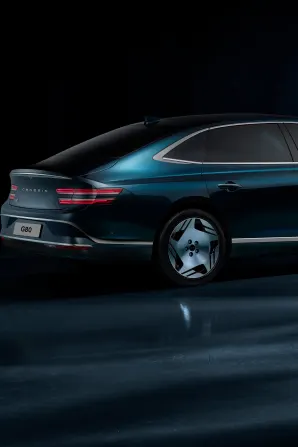
Ask most people to picture a perfect day for a car shoot and they’ll describe bright sun and blue skies. So when the forecast turns grey, the assumption is that the shoot is compromised before it starts. That instinct is understandable, but it gets the physics backwards. Once you understand how light actually interacts with a car’s curved, reflective surfaces – something a car photographer in Perth works with every week – a grey Perth sky stops looking like a setback and starts looking like an opportunity.
Direct sun creates hard-edged shadows and searing hotspots on glossy panels. Cloud cover does the opposite. It spreads and softens the light before it reaches the car, and that changes everything about how the vehicle photographs.
Cloud Cover as a Giant Natural Softbox
In a studio, photographers spend real effort building large diffused light sources to wrap soft light around a subject. An overcast sky does that for free, on a scale no studio can match. The entire dome of cloud becomes one enormous, evenly lit softbox.
This matters more for cars than almost any other subject, because a car body is essentially a mirror. Every panel reflects whatever surrounds it. Under harsh sun, panels reflect a hard, bright sky with sharp transitions. Under cloud, they reflect a smooth, gradual field of light – which reads as clean, controlled and expensive.
Taming Hotspots on Paint and Chrome
Glossy paint and polished chrome are unforgiving under strong light. A single point of sun becomes a blown-out hotspot that no editing can fully recover, because the detail simply isn’t captured. Chrome trim, badges and wheels are the worst offenders, throwing bright specular glare in unpredictable directions.
Diffused overcast light largely solves this. Instead of one intense point source, the reflection is soft and spread out. Highlights roll gently across the surface rather than punching a white hole in it. That means:
- Paintwork holds detail from the brightest to the darkest areas of a panel
- Chrome and glass reflect a soft gradient instead of harsh glare
- Editing time drops because there’s less to rescue and correct
Revealing True Body Lines and Colour
Car design lives in its contours – the way a shoulder line runs into a haunch, the subtle crease along a door. Hard sunlight can flatten these with glare or bury them in heavy shadow. Soft light does neither. It flows across the body evenly, letting gentle tonal shifts describe every curve honestly.
Colour accuracy improves too. Direct sun adds a warm cast and can push a paint colour away from its true shade, while deep shadow muddies it. Overcast light is neutral and consistent, so a car photographs closer to how it looks in person. That’s a real advantage for metallic and pearl finishes, where the flake and depth read cleanly under even light rather than being washed out.
Freedom to Shoot All Day
Bright sun forces you to chase a narrow window – the hour after sunrise or before sunset – when the light is low and kind. Miss it and the light turns harsh. Cloud cover removes that pressure entirely.
Under a soft grey sky, the light stays workable from mid-morning through the afternoon. There’s no race against a golden-hour deadline and no long midday wait for shadows to soften. That flexibility means more time for composition, more angles, and a more relaxed pace – which usually shows in the final images.
Keeping a Flat Sky Dynamic
The one genuine trade-off with overcast is a plain, low-contrast sky. A featureless grey backdrop can look dull if you let it dominate the frame. The fix is compositional, not meteorological.
- Lower the horizon and give the car more of the frame, so the sky plays a supporting role
- Use the environment – textured walls, trees, architecture or a leading road – to add interest the sky isn’t providing
- Shoot tighter, detail-driven angles where the car’s own lines and reflections carry the image
- Let the even light showcase surface texture and colour depth as the subject in its own right
Handled well, a flat sky becomes a clean, distraction-free canvas that keeps all attention on the car.
Reading Perth’s Cloud Cover
Not all grey is created equal. The soft, high overcast that acts like a softbox is very different from a heavy, dark rain-threat sky. Usable overcast is bright and fairly uniform – you can still make out where the sun sits behind the cloud, and the scene reads as light rather than gloomy. That’s the sweet spot.
Thick, dark cloud is a different matter. It cuts light levels sharply, kills the gentle direction that makes soft light flattering, and often signals incoming rain. Learning to tell these apart at a glance is part of working with the sky rather than being caught out by it – and it pairs closely with knowing how to plan around Perth’s heat, wind and summer glare across the year.
A grey day is not a wasted day. Overcast conditions deliver clean reflections, honest colour and even light from morning to afternoon – qualities that are genuinely hard to manufacture under strong sun. Recognising good light in any condition, rather than only under a blue sky, is the mark of a considered approach. The sky’s mood is a tool to work with, not a problem to work around.